Rethinking how care is delivered
Health systems across Europe face a common challenge. Demand for services continues to rise while workforce capacity struggles to keep pace. Ageing populations, increasing prevalence of long-term conditions, and growing expectations of healthcare access are placing unprecedented pressure on services.
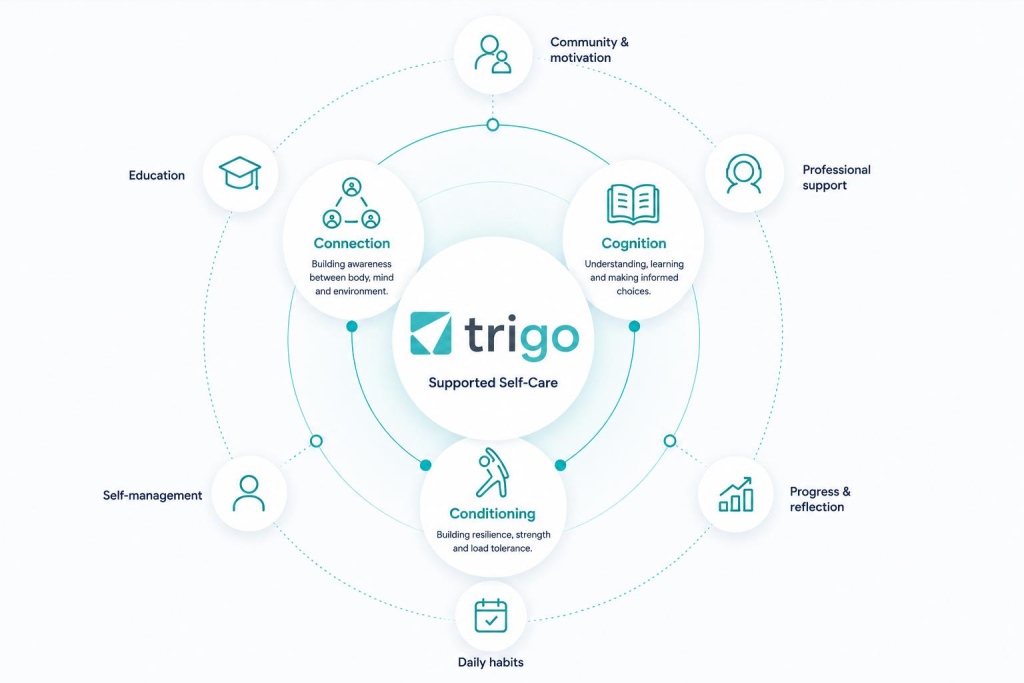
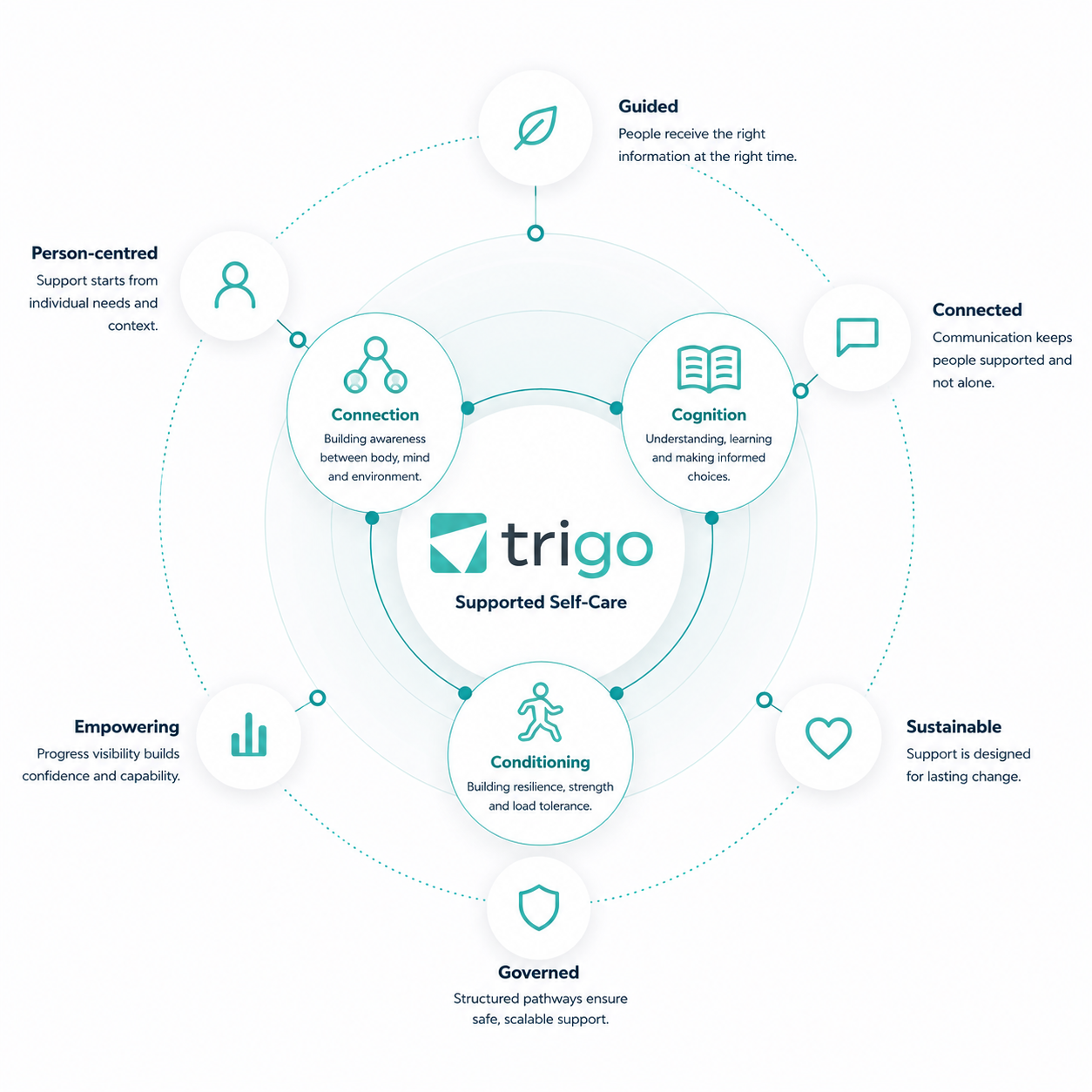
Supported self-care combines education, structured guidance, digital tools and professional oversight to help people make informed decisions and sustain positive health behaviours over time.
The supported self-care model
- Understand – Assess individual needs, risks, preferences and goals.
- Guide – Provide evidence-based information, personalised plans and structured pathways.
- Support – Combine human coaching, professional oversight and digital engagement.
- Progress – Monitor activity, participation, adherence and outcomes.
- Thrive – Enable sustainable behaviour change and long-term wellbeing.
What the evidence shows
A growing body of evidence suggests that supported self-care can improve outcomes while reducing pressure on healthcare systems.
Research from NICE, WHO, OECD and multiple peer-reviewed studies supports structured self-management approaches for long-term conditions and musculoskeletal care. Digital interventions are most effective when combined with human support and professional oversight.
Implications for organisations
- Improve access to the right support at the right time.
- Reduce avoidable treatment intensity per case.
- Increase patient activation and self-efficacy.
- Improve adherence to recommended activities.
- Strengthen workforce productivity and capacity.
- Deliver measurable outcomes at scale.
Related resource
Pathway orchestration for insurers: A white paper exploring how structured digital pathways can improve outcomes, strengthen engagement and reduce unnecessary treatment intensity.
About the authors
The Trigo Research Team brings together expertise from physiotherapy, behavioural science, digital health, health informatics and service transformation.
References
- Bodenheimer T et al. Patient self-management of chronic disease in primary care. JAMA. jamanetwork.com
- OECD Health at a Glance Europe. oecd.org
- NICE Shared Decision Making. nice.org.uk
- WHO Framework on Integrated People-Centred Health Services. who.int
- Panagioti M et al. Self-management support interventions. BMC Health Services Research. bmchealthservres.biomedcentral.com