
Trigo
For many insurers, musculoskeletal claims follow a familiar pattern. A claimant reports a condition. Treatment is authorised. The claimant selects a provider. The treatment pathway proceeds largely outside the insurer’s visibility and control. The insurer knows how many appointments are funded, but often has less visibility into whether those appointments were the minimum necessary to achieve the desired outcome. The challenge is not authorisation. The challenge is optimisation.
A different approach
Trigo was designed around a simple principle. Before treatment begins, every claimant should have rapid access to a physiotherapist who can help determine the most appropriate pathway. Rather than immediately entering a treatment programme, claimants receive an early professional assessment through a rapid-access digital consultation. Some claimants may be suitable for a digitally supported pathway. Others may require hands-on treatment. Some may benefit from a hybrid approach. The important point is that the decision is made using professional assessment rather than assumptions.
Faster access, stronger engagement
One of the most significant findings from a recent insurer pilot was the level of claimant engagement achieved through rapid access. Almost four out of five referred claimants successfully registered and engaged with the service. More than eight out of ten registered users progressed to a professional assessment. Attendance at initial assessments exceeded expectations, with no recorded failures to attend. These findings suggest that rapid access to a physiotherapist creates a strong sense of responsiveness and support, encouraging engagement at the earliest stage of the claim journey.
Better routing into the right pathway
Not every claimant requires the same type of intervention. Following assessment, users were directed into the most appropriate pathway based on professional judgement and patient preference. Where digital treatment was suitable and accepted, users entered a Trigo-managed supported self-care programme. Where digital treatment was not suitable, or where users preferred hands-on care, recommendations were provided regarding likely treatment requirements before referral into the wider physiotherapy network. This created an additional layer of utilisation management that does not typically exist within traditional open-authorisation models.
Creating the potential for lower utilisation
Within digitally managed cases, average treatment intensity was 2.46 clinical contacts per case. This demonstrates the potential for a supported self-care model to deliver care efficiently while maintaining professional oversight. The pilot demonstrated that a professionally managed digital pathway can operate with substantially fewer clinician contacts than many traditional treatment models, creating opportunities for improved efficiency and cost control.
The future of insurer-led musculoskeletal care
The opportunity for insurers is not simply digitising treatment. It is creating greater visibility, earlier intervention and more intelligent utilisation management. A rapid-access front-door model gives insurers the ability to improve claimant experience through faster access, increase engagement and attendance, route claimants into more appropriate pathways, improve visibility of treatment utilisation, support more efficient allocation of clinical resources and create the foundations for better cost control. For insurers seeking new approaches to musculoskeletal care, the future may not lie in authorising more treatment. It may lie in optimising treatment before it begins.
Pilot data available on request. Results derived from a musculoskeletal pilot conducted with a leading Norwegian insurer.
“Before wellbeing programmes can improve organisational outcomes, employees must first choose to participate.”
Why engagement matters
Research consistently identifies employee engagement and sustained participation as critical determinants of workplace wellbeing programme success. Studies of workplace wellbeing and digital health interventions have repeatedly shown that providing access alone does not create behaviour change. Participation is the essential bridge between investment and impact.
The challenge facing employers
Many employers already provide access to wellbeing resources and support services. However, research into digital health interventions demonstrates that participant attrition is common. Sustaining engagement over time remains one of the biggest challenges facing workplace wellbeing initiatives.
The municipal pilot
The pilot was delivered across all municipal kindergarten locations using the Trigo supported self-care platform. Employees were encouraged to engage through behavioural nudges, challenges, gamification, rewards, progress tracking and motivational communications. The objective was not simply awareness. The objective was participation.
Participation across the workforce
Every participating location achieved employee activation. Approximately two-thirds of employees actively engaged with the programme. Participation increased during the pilot rather than declining after launch, suggesting that engagement became embedded within everyday working life.
From registration to behaviour change
The strongest findings related to employee behaviour rather than simple platform usage. More than 80% of participating employees recorded physical activity. Almost 80% achieved recognised WHO physical activity targets at least once. Nearly 90% engaged with routines designed to support positive habits. Almost half tracked sleep. Employees also engaged with hydration tracking, lifestyle assessments and personalised wellbeing tools.
Creating a culture of participation
The programme combined supported self-care with challenges, rewards, gamification and positive reinforcement. Employees were encouraged to set goals, track progress and receive recognition for positive actions. Healthy behaviours were made visible, achievable and rewarding.
Why this matters for employers
Norwegian policy and research consistently highlight the importance of prevention, workplace participation and early engagement. Although this pilot does not demonstrate reductions in sickness absence or organisational costs, it demonstrates that employees are willing to engage with supported self-care when the proposition is relevant, motivating and accessible.
The evolution towards a preventative health ecosystem
The pilot provides a foundation for a broader preventative health ecosystem. The long-term vision combines supported self-care, behavioural engagement, educational content, wellbeing monitoring, professional support and workforce participation initiatives within a single framework.
What employers can learn
The pilot answered an important question. Employees will participate. They will engage with positive health behaviours. They will return repeatedly. For employers seeking to strengthen workforce participation and preventative health, engagement is the foundation upon which future outcomes can be built.
Why this matters – at a glance
- 100% location activation
- 67% workforce participation
- 80%+ physical activity engagement
- 80% WHO target achievement
- 90% routine engagement
- Increasing participation over time
Conclusion
The pilot does not yet demonstrate reductions in sickness absence, healthcare utilisation or organisational costs. Those outcomes require further evaluation. What it does demonstrate is that employees are willing to engage with supported self-care when the experience is relevant, motivating and easy to access. For organisations seeking to strengthen workforce participation and preventative health, engagement is where meaningful change begins.
References
- Eysenbach G. The Law of Attrition. Journal of Medical Internet Research. 2005;7(1):e11. jmir.org
- Goetzel RZ et al. Do Workplace Health Promotion (Wellness) Programs Work? Journal of Occupational and Environmental Medicine. 2014;56(9):927-934. pubmed.ncbi.nlm.nih.gov
- Murray E et al. Attrition Revisited: Adherence and Retention in a Web-Based Alcohol Trial. Journal of Medical Internet Research. 2013;15(8):e162. pmc.ncbi.nlm.nih.gov
- Geraghty AWA et al. Understanding Attrition from Internet Health Interventions. Health Promotion International. 2013;28(3):442-452. academic.oup.com
- Letter of Intent regarding a More Inclusive Working Life (IA Agreement). Norwegian Government.
- STAMI. The Inclusive Workplace Agreement contributed to keeping paid employment. stami.no
Introduction
For more than twenty-five years I have worked as a physiotherapist and coach, supporting everyone from people living with persistent pain to elite athletes competing at the highest level. Throughout that journey, one observation has remained remarkably consistent.
The people who achieve the best long-term outcomes are rarely those who simply receive the most treatment. They are the people who gain understanding, build confidence and gradually learn to take an active role in their own health.
That insight became the foundation for Trigo. Our ambition has never been to replace healthcare professionals with technology. Instead, we believe digital tools should make expert support more accessible, more connected and more sustainable. We call this philosophy supported self-care.
Moving beyond the traditional treatment model
Most of the decisions that influence our wellbeing happen outside the clinic. How active we are, how we sleep, how we respond to stress and how connected we feel all shape our health. The role of modern healthcare should therefore be to help people understand these factors and give them the confidence to act on them. The goal is not independence from professionals. The goal is partnership.
A human-centred philosophy
At Trigo, we see people as biological, psychological and social beings. Lasting improvements often come from understanding how these dimensions interact. This is why our model combines digital guidance with human expertise, structured pathways, educational content, communication tools and ongoing engagement.
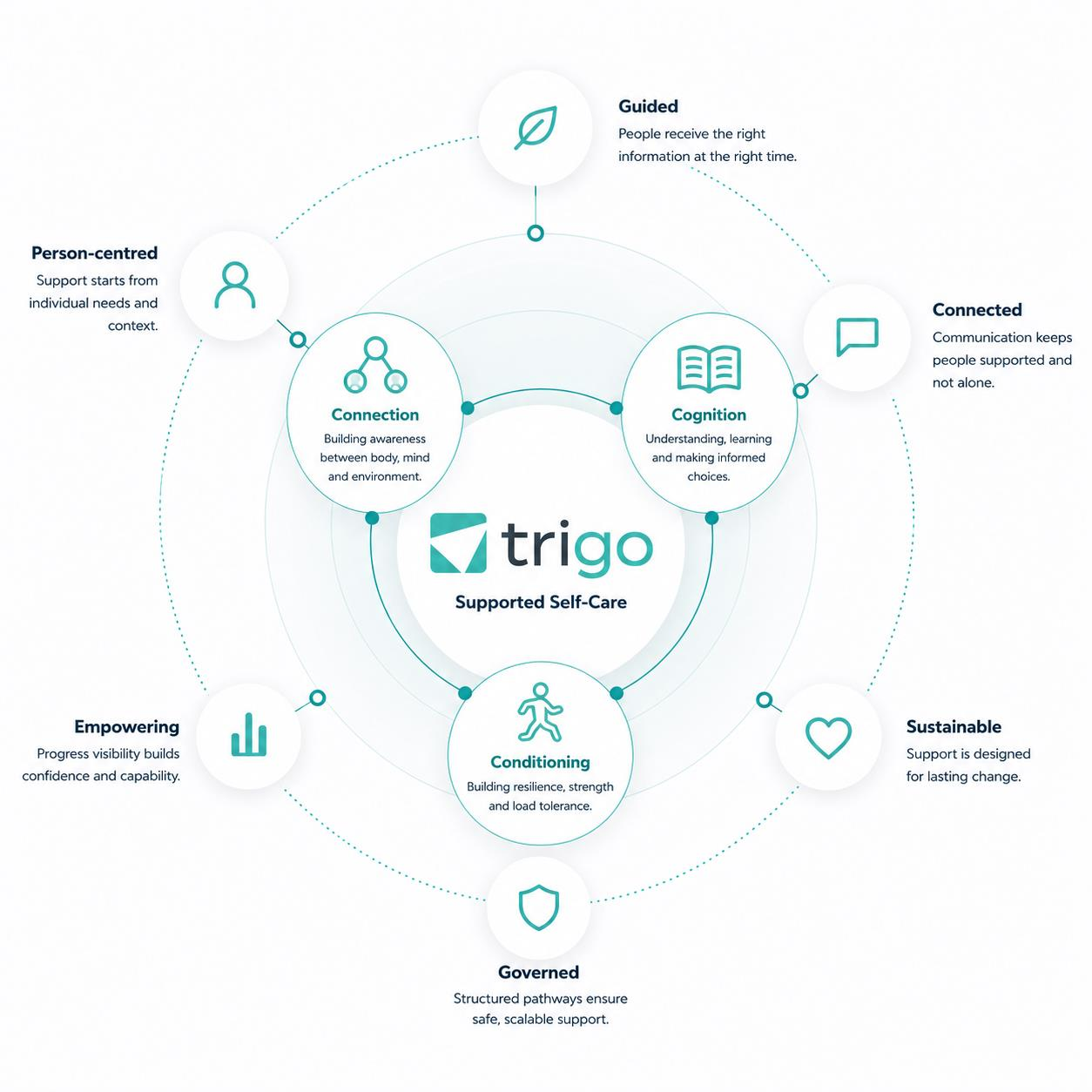
The three pillars of the Trigo approach
Connection – Building awareness between body, mind and environment, while recognising the value of support from others.
Cognition – Increasing understanding and health literacy so that people can make informed decisions and become active participants in their own wellbeing.
Conditioning – Building resilience, strength, mobility and load tolerance through practical, achievable activities that fit everyday life.
Small actions. Sustainable change.
Our experience suggests that people are far more likely to succeed when they can take small, manageable steps that fit naturally into daily life. Success creates confidence. Confidence builds momentum. Over time, these small changes accumulate into meaningful and lasting improvements.
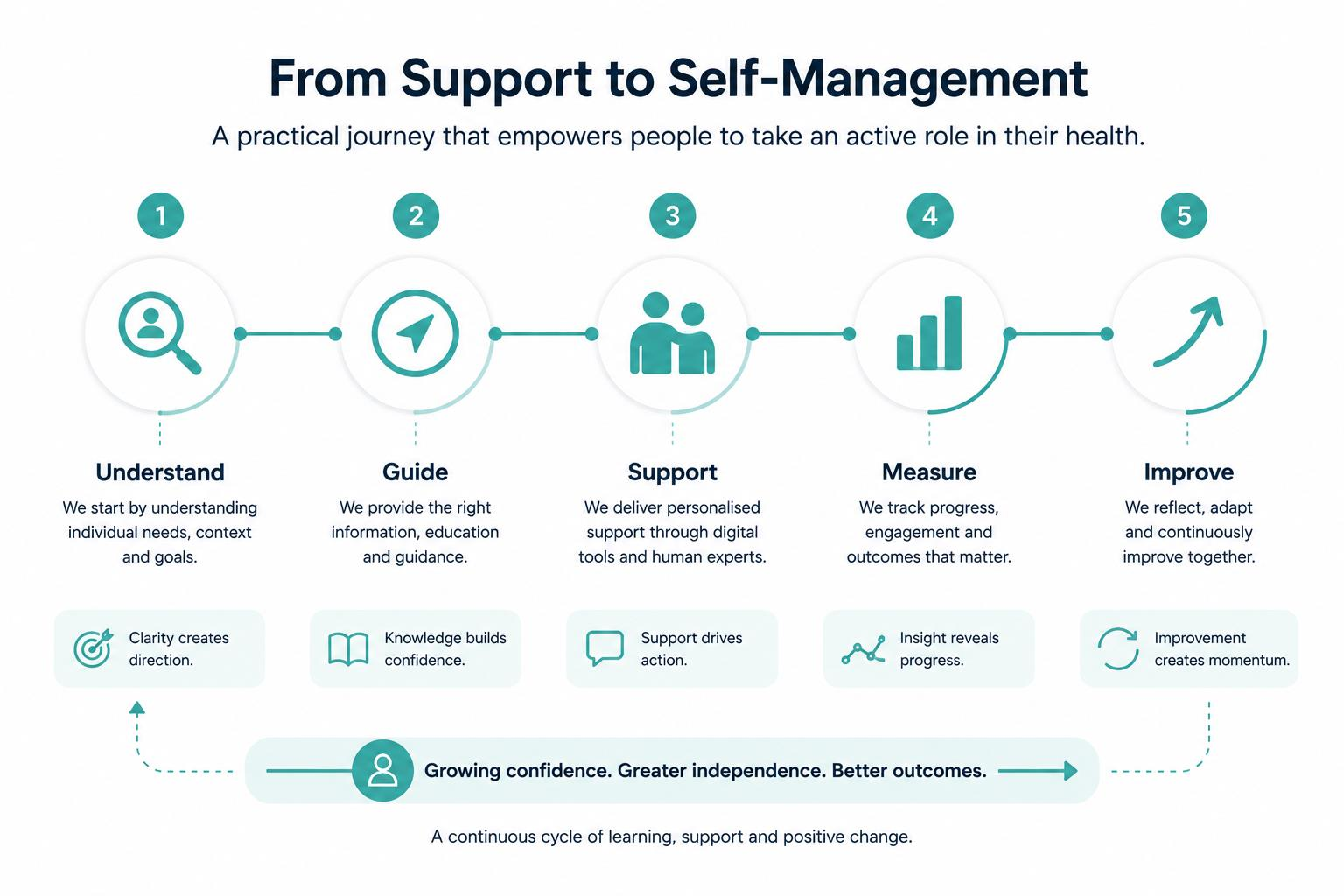
Supported self-care does not mean unsupported care
The purpose of supported self-care is to ensure that professional expertise is used where it creates the greatest value. Digital structure helps with communication, education, routine follow-up and progress visibility, while clinicians and coaches provide reassurance, assessment and guidance when it matters most.
Why this matters for organisations
Supported self-care helps organisations move from reactive treatment towards proactive support. It enables earlier conversations, clearer pathways and a better understanding of how people are progressing over time. That is why we increasingly describe Trigo as an infrastructure for supported self-care.
Looking ahead
The future of health and wellbeing will not be built around choosing between technology and people. It will come from combining the strengths of both. With the right knowledge, the right support and the right encouragement, small actions can create lasting change. That is the philosophy behind Trigo.
Healthcare Was Never Designed for the Challenges We Face Today
Across Europe and much of the developed world, healthcare systems are under increasing pressure.
People are living longer. Chronic conditions are becoming more common. Mental health concerns are growing. Musculoskeletal complaints remain one of the leading causes of disability and sickness absence. At the same time, healthcare providers face workforce shortages, increasing demand and finite resources.
In response, healthcare systems have traditionally done what they were designed to do: treat illness.
When someone develops a health problem, they enter a pathway of assessment, diagnosis and intervention. For many conditions, this approach works well. Modern healthcare has transformed outcomes across countless areas of medicine.
However, there is a growing recognition that many of today’s health challenges cannot be solved through treatment alone.
The question increasingly being asked by researchers, policymakers and employers is not simply:
“How do we treat people when they become unwell?”
It is:
“How do we help people stay well in the first place?”
This question sits at the heart of a growing body of research exploring digital wellbeing.
It is also one of the questions that ultimately influenced the development of the Trigo platform.
The Evolution from Digital Health to Digital Wellbeing
For many years, the term digital health was primarily associated with healthcare delivery.
Digital systems helped clinicians:
- Record patient information.
- Deliver consultations.
- Monitor health conditions.
- Support diagnosis and treatment.
These remain important functions.
However, researchers have increasingly recognised that health is influenced by far more than clinical interventions alone.
In their systematic scoping review, Smits et al. (2022) describe an emerging shift from digital health towards digital wellbeing.
This distinction is important.
Digital health is largely concerned with healthcare services.
Digital wellbeing takes a broader view.
It includes:
- Prevention.
- Behaviour change.
- Lifestyle support.
- Self-management.
- Quality of life.
- Social wellbeing.
- Ongoing participation in health.
The focus moves beyond managing illness and towards supporting wellbeing.
This represents a significant change in perspective.
Rather than asking:
“How do we deliver treatment digitally?”
the question becomes:
“How can digital tools help people make healthier decisions, build healthier habits and maintain wellbeing over time?”
The implications of this shift are profound.
Why Prevention Is Becoming More Important
Most healthcare systems were built around episodes of care.
- A problem occurs.
- A patient enters the system.
- Treatment is provided.
- The episode concludes.
Many modern health challenges do not fit neatly into this model.
Musculoskeletal complaints, inactivity, stress, poor sleep and lifestyle-related health risks often develop gradually over time.
The same is true of many factors associated with workplace absence and reduced productivity.
In these situations, prevention becomes critically important.
The challenge is that prevention has historically been difficult to deliver consistently and at scale.
Traditional healthcare systems are excellent at treating illness.
They are less well suited to supporting thousands of small daily decisions that influence long-term health outcomes.
Digital technologies may help address this gap.
Smits et al. (2022) argue that digital wellbeing systems create opportunities to support individuals before they require formal healthcare intervention.
Rather than waiting for problems to emerge, support can be embedded into everyday life.
This concept resonated strongly with our thinking at Trigo.
The Missing Ingredient: Participation
Of course, providing digital tools does not automatically create better outcomes.
One of the most consistent themes emerging from the wider evidence base is that participation matters.
Research by Howarth et al. (2018) and Sevic et al. (2023) demonstrates that digital workplace health interventions can positively influence employee health behaviours.
However, both reviews identify a recurring challenge.
People must remain engaged.
Simply making services available is rarely sufficient.
Participation becomes the bridge between support and outcomes.
This observation is important because it challenges a common misconception.
Many organisations evaluate wellbeing initiatives according to what is offered.
The evidence increasingly suggests that what matters most is whether people actually participate.
This distinction has significant implications for the future of digital wellbeing.
Why Engagement Is a Health Outcome
Traditionally, engagement has often been treated as a technology metric.
Logins.
Page views.
Session duration.
Yet the evidence suggests engagement may be something much more important.
Milne-Ives et al. (2023) reviewed behaviour change techniques associated with engagement in digital health interventions and identified several recurring themes.
Users were more likely to remain engaged when interventions included:
- Goal setting.
- Progress tracking.
- Self-monitoring.
- Feedback.
- Social support.
These mechanisms help people remain connected to their health goals over time.
Engagement therefore becomes more than a measure of platform usage.
It becomes a mechanism through which behaviour change may occur.
This insight has shaped the development of many modern wellbeing platforms, including Trigo.
Our view is that people are more likely to improve outcomes when support becomes part of their daily lives rather than an occasional healthcare event.
The Rise of Supported Self-Management
Another important theme emerging from the literature is self-management.
Healthcare systems increasingly recognise that individuals play an active role in determining their own health outcomes.
This is not a new concept.
What is changing is our ability to support self-management effectively.
Digital technologies can provide:
- Education.
- Guidance.
- Tracking.
- Feedback.
- Communication.
- Access to professional support.
Together, these capabilities create opportunities for what we often describe as supported self-care.
The distinction is important.
Unsupported self-care assumes people can navigate health challenges alone.
Supported self-care recognises that people often benefit from guidance, structure and professional input.
Research reviewed by Baumbach et al. (2024) highlights the value of active participation and self-management approaches within musculoskeletal care.
These findings align with a broader trend across healthcare.
People often achieve better outcomes when they become active participants rather than passive recipients of care.
Digital wellbeing creates new opportunities to support this process.
Beyond Healthcare Delivery
One of the most interesting implications of digital wellbeing is that it extends beyond healthcare itself.
Health influences:
- Workforce participation.
- Productivity.
- Work ability.
- Quality of life.
- Social participation.
This is why employers, insurers and municipalities are increasingly interested in wellbeing.
Research by Odeen et al. (2013), Tarro et al. (2020) and Cancelliere et al. (2011) suggests that workplace interventions can positively influence outcomes including work ability, productivity, presenteeism and sickness absence.
Importantly, these studies do not suggest that digital tools alone create these outcomes.
Instead, they reinforce the importance of participation, activity, support and behaviour change.
Digital wellbeing platforms create opportunities to deliver these elements more consistently and at greater scale.
This broader perspective is one reason why digital wellbeing is becoming increasingly relevant beyond traditional healthcare settings.
How This Influenced Trigo
When we began developing Trigo, we did not start with technology.
We started with a question.
How can we help more people participate actively in their own health?
The research described above did not provide a blueprint, in fact much of it had not been written at that point.
It has, however, provided a set of principles as we evolved Trigo.
Digital wellbeing literature suggested that prevention and participation deserve greater attention.
Behaviour change research highlighted the importance of engagement.
Self-management research reinforced the value of active participation.
Workplace health research demonstrated that wellbeing has implications far beyond healthcare utilisation.
Together, these findings influenced our thinking.
Rather than building a platform focused solely on appointments or treatment episodes, we sought to create an environment that supports:
- Engagement.
- Participation.
- Self-management.
- Access to professional support.
- Ongoing wellbeing.
In many ways, Trigo represents an attempt to bring these evidence-informed principles together within a single experience.
What This Means for Organisations
For employers, insurers and municipalities, the shift towards digital wellbeing presents both an opportunity and a challenge.
The opportunity is clear.
Digital technologies create new possibilities for supporting health at scale.
The challenge is ensuring that these systems genuinely help people participate rather than simply providing another digital service.
The evidence increasingly suggests that successful wellbeing strategies require more than information.
- They require engagement.
- They require participation.
- They require support.
Digital wellbeing is therefore not simply about technology.
It is about creating conditions that help people make healthier decisions and sustain healthier behaviours over time.
Looking Forward
Healthcare will always require clinicians, treatment pathways and specialist expertise.
Digital wellbeing is not intended to replace these things.
Nor does the evidence suggest it should.
Instead, digital wellbeing represents an expansion of how we think about health.
It shifts some attention towards prevention.
Towards participation.
Towards supporting wellbeing before health problems become significant enough to require intensive intervention.
This perspective is increasingly reflected across the research literature.
It is also reflected in the way we think about health at Trigo.
The future of healthcare will not be built on technology alone.
It will be built on the thoughtful combination of evidence, human support and practical tools that help people engage with their own wellbeing.
That journey starts long before someone becomes a patient.
References
- Smits, M., van Velthoven, M. H., Kotz, D., et al. (2022). From Digital Health to Digital Well-being: Systematic Scoping Review. Journal of Medical Internet Research.
- Howarth, A., Quesada, J., Silva, J., Judycki, S., Mills, P. R., & Schiavo, J. H. (2018). The Impact of Digital Health Interventions on Health-Related Outcomes in the Workplace: A Systematic Review. Digital Health, 4.
- Sevic, S., Müssig, M., Bredemeier, J., et al. (2023). Effectiveness of eHealth Interventions Targeting Employee Health Behaviors: Systematic Review. Journal of Medical Internet Research, 25:e38307.
- Milne-Ives, M., et al. (2023). Potential Associations Between Behaviour Change Techniques and Engagement With Mobile Health Apps.
- Baumbach, P., Roheger, M., Katalinic, O. M., et al. (2024). Cost-Effectiveness of Treatments for Musculoskeletal Conditions Offered by Physiotherapists: A Systematic Review. Sports Medicine – Open.
- Odeen, M., Magnussen, L. H., Maeland, S., Larun, L., Eriksen, H. R., & Tveito, T. H. (2013). Systematic Review of Active Workplace Interventions to Reduce Sickness Absence. Occupational Medicine.
- Tarro, L., Llauradó, E., Ulldemolins, G., Hermoso, P., Solà, R., & Moriña, D. (2020). Effectiveness of Workplace Interventions for Improving Absenteeism, Productivity and Work Ability of Employees: A Systematic Review and Meta-Analysis of Randomized Controlled Trials. International Journal of Environmental Research and Public Health, 17(6), 1901.
- Cancelliere, C., Cassidy, J. D., Ammendolia, C., & Côté, P. (2011). Are Workplace Health Promotion Programs Effective at Improving Presenteeism in Workers? A Systematic Review and Best Evidence Synthesis of the Literature. BMC Public Health.
We Know More About Health Than Ever Before. So Why Is Change Still So Difficult?
Most people understand the fundamentals of good health.
- They know physical activity is beneficial.
- They know sleep matters.
- They know stress has consequences.
- They know that maintaining physical and mental wellbeing is important.
Yet knowledge alone rarely produces lasting change.
This creates one of the most persistent challenges in healthcare, workplace wellbeing and prevention.
If information is widely available, why do so many people struggle to maintain healthy behaviours?
The answer appears repeatedly throughout the research literature.
Behaviour change is not primarily an information problem.
It is an engagement problem.
Understanding this distinction has become increasingly important as healthcare systems, employers and insurers invest in digital wellbeing solutions.
Technology has made support more accessible than ever before. However, access alone does not guarantee participation.
People must remain engaged long enough for healthier behaviours to become habits.
This insight has influenced a significant body of research over the past decade and has played an important role in shaping the Trigo platform.
The Missing Link Between Intention and Action
Most people have experienced the gap between intention and action.
A person may intend to become more physically active, improve sleep habits or follow a rehabilitation programme.
The challenge is not deciding to start.
The challenge is continuing.
Researchers have studied this phenomenon extensively.
Across health promotion, rehabilitation and workplace wellbeing programmes, one finding appears consistently:
People are more likely to achieve positive outcomes when they remain engaged with the intervention.
This may sound obvious, but it represents an important shift in thinking.
Historically, many programmes focused on delivering information.
Increasingly, researchers are asking a different question:
“How do we help people stay involved long enough for meaningful change to occur?”
The answer lies in understanding engagement.
What the Research Tells Us About Engagement
One of the most useful reviews in this area was conducted by Milne-Ives and colleagues (2023), who examined behaviour change techniques associated with engagement in mobile health applications.
The review identified several techniques that repeatedly appeared in successful interventions.
These included:
- Goal setting.
- Self-monitoring.
- Progress tracking.
- Feedback.
- Social support.
- Behavioural prompts.
The significance of these findings extends beyond mobile applications.
They suggest that engagement can be deliberately designed.
People are more likely to remain involved when they can see progress, understand their goals and receive feedback on their actions.
This is an important distinction.
Engagement should not be viewed as a marketing metric.
It is increasingly recognised as a mechanism that helps individuals translate intention into action.
For organisations investing in wellbeing programmes, this observation has profound implications.
The quality of an intervention matters.
However, participation may matter just as much.
Why Information Alone Is Not Enough
Many traditional health programmes operate on a relatively simple assumption.
- Provide information.
- People will make better decisions.
Unfortunately, human behaviour is rarely that straightforward.
Most people already possess a reasonable understanding of what constitutes healthy behaviour.
The challenge lies in maintaining motivation over time.
Researchers often refer to this as the intention-behaviour gap.
- People intend to change.
- They intend to exercise.
- They intend to complete rehabilitation programmes.
- They intend to prioritise wellbeing.
Yet competing demands, busy schedules and everyday distractions frequently disrupt these intentions.
This is where engagement mechanisms become important.
- They help keep health goals visible.
- They provide reminders.
- They reinforce progress.
Most importantly, they help maintain momentum.
Without these mechanisms, even well-designed interventions can struggle to sustain participation.
The Role of Gamification: More Than Points and Badges
Few concepts in digital wellbeing have generated as much misunderstanding as gamification.
For some, the term evokes images of games, competitions and superficial reward systems.
The academic literature presents a very different picture.
Edwards and colleagues (2016) reviewed gamification within health applications and found that many successful interventions incorporated recognised behaviour change techniques.
These included:
- Achievement systems.
- Progress indicators.
- Feedback loops.
- Goal attainment.
- Recognition.
The important point is that these mechanisms are not valuable because they are entertaining.
They are valuable because they influence motivation.
They help individuals recognise progress and sustain effort.
More recent evidence reinforces this perspective.
Alzghoul and colleagues (2024) conducted a systematic review and meta-analysis examining the effectiveness of gamification in health and wellbeing programmes.
The review found evidence that gamification can positively influence:
- Engagement.
- Participation.
- Motivation.
- Physical activity.
However, the strongest outcomes occurred when gamification was integrated into broader behaviour change programmes.
This is an important nuance.
The evidence does not suggest that points and badges alone improve health.
Instead, it suggests that carefully designed engagement mechanisms can support participation when combined with meaningful goals and structured support.
Why Engagement Matters for Employers
The implications of engagement extend far beyond individual health.
Employers increasingly invest in wellbeing programmes because workforce health influences organisational outcomes.
Research by Howarth et al. (2018) and Sevic et al. (2023) suggests that digital workplace health interventions can positively influence employee health behaviours.
However, both reviews identify engagement as a critical determinant of success.
A wellbeing programme cannot influence behaviour if employees do not participate.
This creates an important challenge for organisations.
The objective is not simply to provide services.
The objective is to create conditions that encourage ongoing participation.
The distinction may seem subtle, but it changes how programmes are designed, implemented and evaluated.
Participation becomes more than an activity metric.
It becomes a leading indicator of programme effectiveness.
Why Human Support Still Matters
As digital health technologies become more sophisticated, it is tempting to assume that technology alone can drive behaviour change.
The evidence suggests otherwise.
Many successful interventions combine digital tools with human support.
Across multiple studies, engagement improves when individuals have access to guidance, coaching or professional input.
This finding is consistent with observations from workplace wellbeing, rehabilitation and self-management programmes.
- Technology can improve accessibility.
- Technology can improve consistency.
- Technology can improve scalability.
However, human support often provides accountability, reassurance and context.
The most effective systems frequently combine both.
This observation has significantly influenced the evolution of Trigo.
How the Evidence Influenced Trigo
When we began developing Trigo, we were interested in a simple question:
How can we help people remain engaged with their health?
The evidence did not point towards a single solution.
Instead, it identified several recurring principles.
People engage more effectively when they:
- Understand their goals.
- Can monitor progress.
- Receive feedback.
- Experience recognition.
- Have access to support.
These principles influenced many aspects of the platform.
- Activity tracking provides visibility.
- Goal-setting tools create structure.
- Progress indicators reinforce momentum.
- Communication features support connection.
- Professional guidance remains available when additional support is needed.
Importantly, these features were not introduced because they are fashionable digital trends.
They reflect mechanisms repeatedly identified within the evidence base as supporting participation and behaviour change.
The objective is not to maximise platform usage.
The objective is to help people remain engaged with healthier behaviours over time.
Engagement as Infrastructure
One of the most important lessons emerging from the research is that engagement should not be treated as an optional enhancement.
It is foundational.
- Without engagement, prevention programmes struggle.
- Without engagement, self-management becomes difficult.
- Without engagement, workplace wellbeing initiatives often fail to achieve their potential.
This is why we increasingly view engagement as infrastructure.
Just as healthcare systems require clinical pathways and professional expertise, digital wellbeing systems require mechanisms that help people remain involved.
The evidence suggests that engagement is not accidental.
- It can be supported.
- It can be encouraged.
- It can be designed.
Looking Forward
The future of wellbeing will depend on more than technology.
It will depend on understanding how people behave.
The research reviewed by Milne-Ives et al. (2023), Edwards et al. (2016), Alzghoul et al. (2024), Howarth et al. (2018) and Sevic et al. (2023) paints a remarkably consistent picture.
People are more likely to achieve positive outcomes when they remain engaged.
Engagement improves when interventions provide structure, feedback, visibility and support.
Technology can help.
Professional guidance remains important.
The strongest approaches combine both.
At Trigo, these findings have shaped the way we think about prevention, supported self-care and workforce wellbeing.
Because ultimately, meaningful change does not begin when information is delivered.
It begins when people remain engaged long enough to act on it.
References
- Milne-Ives, M., et al. (2023). Potential Associations Between Behaviour Change Techniques and Engagement With Mobile Health Apps.
- Edwards, E. A., Lumsden, J., Rivas, C., et al. (2016). Gamification for Health Promotion: Systematic Review of Behaviour Change Techniques in Smartphone Apps. BMJ Open.
- Alzghoul, A., Alkhazaleh, Z., Alkhawaldeh, M., et al. (2024). The Effectiveness of Gamification in Health and Wellbeing: A Systematic Review and Meta-Analysis. The Open Public Health Journal.
- Howarth, A., Quesada, J., Silva, J., Judycki, S., Mills, P. R., & Schiavo, J. H. (2018). The Impact of Digital Health Interventions on Health-Related Outcomes in the Workplace: A Systematic Review. Digital Health, 4.
- Sevic, S., Müssig, M., Bredemeier, J., et al. (2023). Effectiveness of eHealth Interventions Targeting Employee Health Behaviors: Systematic Review. Journal of Medical Internet Research, 25:e38307.
The Traditional Healthcare Model Has a Structural Limitation
For much of modern healthcare history, care has been organised around professional intervention.
- A health problem occurs.
- A clinician assesses the situation.
- A treatment plan is prescribed.
- The patient follows instructions.
- The cycle repeats when further intervention is required.
This model has achieved remarkable successes across many areas of medicine. It remains essential for acute illness, trauma, surgery and complex disease management.
However, many of today’s most significant health challenges do not fit neatly into this pattern.
Musculoskeletal complaints, inactivity, stress-related conditions, sleep disruption and many lifestyle-related health issues often develop gradually over time.
The factors influencing these conditions rarely exist solely within the consulting room.
They exist within daily routines, behaviours, decisions and habits.
This reality has prompted researchers and healthcare providers to ask an important question:
What happens during the thousands of hours when a clinician is not present?
The answer has increasingly led healthcare towards self-management and supported self-care.
This shift has become one of the most influential developments in modern health thinking and represents one of the core principles underpinning the Trigo platform.
The Problem with Passive Care
- The traditional patient role is often surprisingly passive.
- People attend appointments.
- They receive advice.
- They may receive treatment.
- Then they return home.
What happens next largely determines the outcome.
This is particularly true for musculoskeletal health.
A physiotherapist may spend forty-five minutes with an individual.
The remaining 10,000 minutes of the week are spent outside the clinical environment.
Those 10,000 minutes often matter more than the appointment itself.
Research increasingly reflects this reality.
Healthcare outcomes are frequently influenced by:
- Physical activity.
- Daily habits.
- Adherence.
- Self-management.
- Behavioural choices.
- Consistency over time.
These factors cannot be delivered by clinicians alone.
They require participation from the individual.
This does not diminish the importance of professional expertise.
Rather, it highlights the limitations of approaches that rely exclusively on professional intervention.
The evidence increasingly suggests that sustainable improvement often depends upon active participation by the person receiving support.
What the Research Says About Self-Management
One of the most relevant pieces of evidence supporting this perspective comes from Baumbach and colleagues (2024), who reviewed the cost-effectiveness of physiotherapy interventions for musculoskeletal conditions.
The review found strong support for active rehabilitation approaches and highlighted the value of interventions that encourage participation, education and self-management.
This finding is important.
The paper is not merely concerned with clinical effectiveness.
It examines value.
Healthcare systems, insurers and employers all face resource constraints.
Interventions that help people participate more effectively in their own care may create benefits for individuals and organisations alike.
The review aligns with a broader trend visible throughout healthcare research.
Across multiple clinical disciplines, passive treatment models are increasingly being supplemented by approaches that encourage individuals to take a more active role in their own health.
The evidence does not suggest that professional care becomes less important.
Instead, it suggests that outcomes often improve when professional care is combined with active participation.
This distinction sits at the heart of supported self-care.
Self-Care Does Not Mean Self-Reliance
One of the most common misunderstandings surrounding self-care is the assumption that individuals are expected to manage alone.
This is not what the evidence supports.
There is a significant difference between:
- Unsupported self-care.
- Supported self-care.
Unsupported self-care often consists of information without guidance.
A person receives educational materials, online resources or generic advice and is expected to navigate the challenge independently.
Supported self-care is fundamentally different.
It combines personal responsibility with professional support.
Individuals remain active participants, but they are not left without structure, guidance or access to expertise.
This distinction is increasingly important.
Many people know what they should do.
The challenge is understanding:
- How to begin.
- How to remain consistent.
- How to adapt when circumstances change.
- When to seek additional support.
Supported self-care addresses these challenges.
It creates a framework within which people can participate more confidently and more effectively.
The Link Between Engagement and Self-Care
In the previous article within this series, we explored the growing body of research examining engagement and behaviour change.
Research reviewed by Milne-Ives et al. (2023), Edwards et al. (2016) and Alzghoul et al. (2024) consistently highlights the importance of:
- Goal setting.
- Feedback.
- Progress monitoring.
- Reinforcement.
- Ongoing participation.
These mechanisms play a crucial role within supported self-care.
- Knowledge alone rarely changes behaviour.
- People must remain engaged with the process.
This is one reason why supported self-care and engagement are so closely linked.
Self-care without engagement becomes difficult to sustain.
Engagement without meaningful self-management activities lacks purpose.
Together, they form a powerful combination.
The evidence increasingly suggests that individuals are more likely to maintain healthy behaviours when they can:
- Track progress.
- See improvement.
- Receive encouragement.
- Access support when required.
Supported self-care provides a structure for making this possible.
Why Healthcare Is Moving Towards Partnership
Historically, healthcare relationships were often hierarchical.
- Professionals diagnosed.
- Professionals prescribed.
- Patients complied.
Modern healthcare increasingly recognises that effective care is often collaborative.
The individual possesses knowledge that professionals do not.
They understand:
- Their daily environment.
- Their motivations.
- Their barriers.
- Their routines.
- Their personal goals.
Clinicians contribute expertise, assessment and guidance.
The most effective outcomes frequently emerge when these perspectives are combined.
Supported self-care reflects this evolution.
Rather than positioning people as passive recipients of healthcare, it positions them as active partners.
This shift has implications far beyond clinical care.
It influences prevention, rehabilitation, wellbeing and workforce health.
Why This Matters for Employers
Employers increasingly recognise that healthcare challenges do not exist exclusively within healthcare settings.
Health influences:
- Attendance.
- Work ability.
- Productivity.
- Engagement.
- Workforce resilience.
Research reviewed by Odeen et al. (2013), Tarro et al. (2020) and Cancelliere et al. (2011) suggests that workplace interventions can positively influence outcomes that matter to organisations.
A recurring theme across this literature is participation.
Programmes achieve little if people do not engage.
Supported self-care offers an important opportunity in this context.
Rather than relying exclusively on episodic intervention, organisations can help create environments that encourage ongoing participation in health.
This is particularly relevant in workforce wellbeing programmes, where the objective is often prevention rather than treatment.
Why Digital Technology Changes the Equation
Historically, supporting self-care at scale has been difficult.
Healthcare professionals cannot provide continuous support to every individual.
Digital technologies create new possibilities.
They allow people to access:
- Educational content.
- Personalised guidance.
- Progress tracking.
- Behavioural support.
- Professional input.
These capabilities help bridge the gap between appointments.
Importantly, technology should not be viewed as a replacement for professional expertise.
The strongest evidence does not support that conclusion.
Instead, technology creates opportunities to extend the reach of professional support and make self-management more practical.
This observation has been particularly influential in the development of digital wellbeing platforms.
How Supported Self-Care Influenced Trigo
Supported self-care is not simply a feature within Trigo.
It is one of the platform’s foundational principles.
Our starting point was not:
“How do we deliver more appointments?”
Instead, we asked:
“How do we help people participate more actively in their own health?”
The evidence reviewed by Baumbach et al. (2024), together with wider behaviour change and engagement research, frames this via several recurring principles.
People benefit from:
- Clear goals.
- Accessible guidance.
- Progress visibility.
- Ongoing encouragement.
- Access to professional expertise.
These principles reflect how Trigo was designed.
The platform seeks to create an environment where individuals can engage with their own health while retaining access to support when required.
Supported self-care therefore becomes more than a clinical concept.
It becomes a practical operating model.
Building Sustainable Change
One of the most important lessons emerging from healthcare research is that sustainable outcomes rarely depend upon isolated interventions.
Meaningful change often results from small actions repeated consistently over time.
This is particularly relevant for:
- Physical activity.
- Musculoskeletal health.
- Sleep.
- Lifestyle behaviours.
- Preventive health.
Supported self-care creates conditions that encourage these small actions.
- It helps people remain connected to their goals.
- It provides structure during periods when motivation fluctuates.
- It reinforces the idea that health is not something delivered by professionals alone.
- It is something created through participation.
Looking Forward
Healthcare systems face growing pressure to improve outcomes while using resources responsibly.
The evidence increasingly suggests that active participation has an important role to play.
Research reviewed by Baumbach et al. (2024) supports self-management and active rehabilitation approaches.
Behaviour change research highlights the importance of engagement.
Workplace health research reinforces the value of participation.
Taken together, these findings point towards a common conclusion.
People achieve the greatest benefit when they are supported to become active participants in their own health.
- Not isolated.
- Not unsupported.
- But supported.
This distinction matters.
At Trigo, it has become one of the principles guiding how we think about prevention, wellbeing and healthcare delivery.
Because the future of healthcare is unlikely to depend solely on what happens during appointments.
It will also depend on what happens between them.
References
- Baumbach, P., Roheger, M., Katalinic, O. M., et al. (2024). Cost-Effectiveness of Treatments for Musculoskeletal Conditions Offered by Physiotherapists: A Systematic Review. Sports Medicine – Open.
- Milne-Ives, M., et al. (2023). Potential Associations Between Behaviour Change Techniques and Engagement With Mobile Health Apps.
- Edwards, E. A., Lumsden, J., Rivas, C., et al. (2016). Gamification for Health Promotion: Systematic Review of Behaviour Change Techniques in Smartphone Apps. BMJ Open.
- Alzghoul, A., Alkhazaleh, Z., Alkhawaldeh, M., et al. (2024). The Effectiveness of Gamification in Health and Wellbeing: A Systematic Review and Meta-Analysis. The Open Public Health Journal.
- Odeen, M., Magnussen, L. H., Maeland, S., Larun, L., Eriksen, H. R., & Tveito, T. H. (2013). Systematic Review of Active Workplace Interventions to Reduce Sickness Absence. Occupational Medicine.
- Tarro, L., Llauradó, E., Ulldemolins, G., Hermoso, P., Solà, R., & Moriña, D. (2020). Effectiveness of Workplace Interventions for Improving Absenteeism, Productivity and Work Ability of Employees: A Systematic Review and Meta-Analysis of Randomized Controlled Trials. International Journal of Environmental Research and Public Health, 17(6), 1901.
- Cancelliere, C., Cassidy, J. D., Ammendolia, C., & Côté, P. (2011). Are Workplace Health Promotion Programs Effective at Improving Presenteeism in Workers? A Systematic Review and Best Evidence Synthesis of the Literature. BMC Public Health.
We Have Built Healthcare Around Access to Professionals. But Is That Enough?
Musculoskeletal conditions are among the most common health challenges facing individuals, employers and healthcare systems.
Back pain, neck pain, shoulder problems, joint conditions and movement-related disorders affect millions of people every year. They contribute significantly to healthcare utilisation, workplace absence, reduced productivity and diminished quality of life.
The scale of the challenge is substantial.
Yet despite decades of clinical advancement, many healthcare systems continue to struggle with a familiar problem.
- Demand exceeds capacity.
- Waiting lists grow.
- Clinician resources remain finite.
- Individuals often wait weeks or months before receiving support.
For many organisations, this creates an uncomfortable reality.
The traditional response to increasing demand has often been to increase clinical capacity.
- More appointments.
- More referrals.
- More interventions.
But what if the future of musculoskeletal care is not primarily about increasing the number of appointments?
What if it is about delivering the right support at the right time through the right channel?
This question has become increasingly important as healthcare systems explore digital models of care delivery.
The emerging evidence suggests that telehealth and digital-first pathways may have an important role to play.
These findings have significantly influenced the way we think about support within the Trigo platform.
The Access Problem
One of the greatest barriers to effective musculoskeletal care is often access.
The challenge is not necessarily the availability of clinical expertise.
The challenge is connecting people to that expertise efficiently.
Traditional healthcare pathways frequently involve:
- Waiting periods.
- Administrative delays.
- Multiple referral stages.
- Travel requirements.
- Scheduling difficulties.
For individuals experiencing pain, these barriers can create frustration and delay.
For employers and insurers, delayed access can prolong absence and increase costs.
For healthcare providers, growing demand places pressure on already stretched resources.
Importantly, many musculoskeletal conditions do not require complex medical intervention as a first response.
Many individuals benefit from:
- Education.
- Advice.
- Activity guidance.
- Self-management support.
- Early assessment.
The question therefore becomes:
How can these forms of support be delivered more effectively?
This is where telehealth enters the conversation.
What the Research Says About Telehealth
For many years, telehealth was viewed primarily as a convenience.
The assumption was that digital consultations represented a compromise compared with traditional face-to-face care.
The evidence increasingly challenges this assumption.
Marks and colleagues (2023) reviewed the health economic impact of musculoskeletal physiotherapy delivered through telehealth.
The review found evidence that telehealth can achieve outcomes comparable to face-to-face delivery across many musculoskeletal presentations while improving accessibility and reducing delivery costs.
These findings are important because they shift the conversation.
The question is no longer:
“Can telehealth work?”
The question increasingly becomes:
“When is telehealth the most appropriate option?”
This distinction reflects the growing maturity of the evidence base.
Telehealth is no longer being evaluated as an experimental concept.
It is increasingly being evaluated as a practical component of healthcare delivery.
A Stronger Evidence Base Emerges
Further support for this perspective comes from Bargeri and colleagues (2024).
Their umbrella review examined evidence relating to telemedicine for musculoskeletal disorders across multiple systematic reviews.
The findings were remarkably consistent.
Telemedicine demonstrated:
- Comparable clinical outcomes.
- High patient satisfaction.
- Improved accessibility.
- Practical effectiveness across a range of musculoskeletal conditions.
Perhaps most importantly, the review highlighted that many individuals can receive meaningful support without requiring an initial face-to-face consultation.
This finding challenges one of the longstanding assumptions within healthcare delivery.
Historically, physical presence has often been viewed as essential.
The evidence increasingly suggests that effective support depends less on location and more on the quality of the pathway itself.
This observation has significant implications for healthcare design.
The Future Is Not Digital Versus Human
One of the most common misconceptions surrounding telehealth is that technology seeks to replace clinicians.
The research does not support this conclusion.
Neither Marks et al. (2023) nor Bargeri et al. (2024) suggest that professional expertise becomes less important.
In fact, the opposite may be true.
Effective telehealth depends upon:
- Skilled assessment.
- Clinical judgement.
- Appropriate escalation.
- Structured support.
The clinician remains central.
What changes is the method of delivery.
This distinction matters.
The future of musculoskeletal care is unlikely to be a choice between digital support and professional expertise.
It is far more likely to be a combination of both.
- Technology improves access.
- Clinicians provide expertise.
Together they create pathways that are more responsive, more scalable and more accessible.
This principle has become increasingly important in the design of modern healthcare systems.
What Happens Between Appointments Matters Most
One of the recurring themes throughout this article series has been participation.
The previous article explored supported self-care and the growing recognition that health outcomes are often influenced by what happens outside formal healthcare settings.
This principle applies particularly strongly within musculoskeletal care.
Most improvement occurs between appointments.
Individuals spend the overwhelming majority of their time:
- Moving.
- Working.
- Exercising.
- Resting.
- Managing symptoms.
The appointment itself is only one component of the journey.
This observation helps explain why telehealth can be effective.
The objective is not simply to conduct appointments remotely.
The objective is to support people more effectively during the periods between appointments.
Digital pathways create opportunities to provide:
- Guidance.
- Monitoring.
- Education.
- Progress tracking.
- Ongoing communication.
These capabilities help extend the influence of professional support beyond the consultation itself.
Why Speed Matters
Another important lesson emerging from musculoskeletal research is the value of early intervention.
Many conditions become more difficult to manage when support is delayed.
Waiting weeks for an assessment may not always be clinically necessary.
In many situations, individuals benefit from quickly receiving:
- Reassurance.
- Advice.
- Guidance.
- Direction.
Digital-first pathways can improve responsiveness.
They reduce geographical barriers.
They reduce scheduling constraints.
They create opportunities for earlier engagement.
Importantly, earlier support does not necessarily mean more support.
Often it simply means the right support delivered sooner.
This distinction is particularly relevant for employers and insurers seeking to improve access while managing resources responsibly.
The Implications for Employers and Insurers
Musculoskeletal conditions remain one of the leading causes of workplace absence and reduced work ability.
Research reviewed by Odeen et al. (2013) and Tarro et al. (2020) suggests that workplace interventions can positively influence outcomes that matter to organisations.
While these studies do not specifically examine telehealth, they reinforce an important principle.
- Timely support matters.
- Participation matters.
- Access matters.
Digital pathways create opportunities to address all three.
- For employers, this may mean reducing barriers to support.
- For insurers, it may mean improving accessibility and efficiency.
For individuals, it means receiving help when it is needed rather than when capacity becomes available.
The significance of this shift should not be underestimated.
How This Influenced Trigo
When we examined the emerging evidence around telehealth, one conclusion became increasingly clear.
The future of musculoskeletal care is not about replacing clinicians.
It is about improving access to clinicians.
This insight influenced several aspects of the Trigo platform.
Our objective was not to create a self-service system where individuals are left to manage complex health challenges alone.
Nor was it to recreate traditional healthcare pathways in digital form.
Instead, we sought to combine:
- Supported self-care.
- Professional expertise.
- Telehealth access.
- Behavioural support.
- Structured escalation pathways.
The platform is designed to help individuals access appropriate support while maintaining active participation in their own health.
Telehealth becomes one component of a broader support ecosystem rather than a standalone service.
This distinction is important because it reflects what the evidence suggests.
The strongest outcomes emerge when professional support and active participation work together.
Building Smarter Pathways
One of the most valuable lessons emerging from the literature is that healthcare systems should be judged not only by the quality of individual interventions but also by the quality of the pathways connecting them.
- Appointments matter.
- Clinicians matter.
- Treatment matters.
- But pathways matter too.
Digital technologies create opportunities to redesign those pathways.
- They help connect people to support more efficiently.
- They improve continuity.
- They increase accessibility.
Most importantly, they help ensure that professional expertise is available where it adds the greatest value.
This is particularly important at a time when healthcare systems face growing demand and limited resources.
Looking Forward
The future of musculoskeletal care will require innovation.
Not innovation for its own sake.
Innovation that helps more people access effective support more quickly and more efficiently.
The evidence reviewed by Marks et al. (2023) and Bargeri et al. (2024) suggests that telehealth can play an important role in achieving this objective.
The research does not suggest that technology replaces healthcare professionals.
Nor does it suggest that every condition can be managed remotely.
What it does suggest is that digital delivery can become an effective component of modern musculoskeletal pathways.
At Trigo, these findings have helped shape our thinking.
The future is not more appointments.
The future is better pathways.
Pathways that combine professional expertise, supported self-care, digital accessibility and active participation.
Because ultimately, the goal is not simply to increase healthcare activity.
The goal is to improve outcomes.
References
- Marks, D., et al. (2023). The Health Economic Impact of Musculoskeletal Physiotherapy Delivered by Telehealth: A Systematic Review.
- Bargeri, S., et al. (2024). Effectiveness of Telemedicine for Musculoskeletal Disorders: Umbrella Review. Journal of Medical Internet Research.
- Odeen, M., Magnussen, L. H., Maeland, S., Larun, L., Eriksen, H. R., & Tveito, T. H. (2013). Systematic Review of Active Workplace Interventions to Reduce Sickness Absence. Occupational Medicine.
- Tarro, L., Llauradó, E., Ulldemolins, G., Hermoso,P., Solà, R., & Moriña, D. (2020). Effectiveness of Workplace Interventions for Improving Absenteeism, Productivity and Work Ability of Employees: A Systematic Review and Meta-Analysis of Randomized Controlled Trials. International Journal of Environmental Research and Public Health, 17(6), 1901.
Healthcare Has a Participation Problem
Across healthcare, insurance and workplace wellbeing, there is no shortage of services.
There are clinicians, treatment pathways, wellbeing programmes, digital tools and health information resources available in almost every developed healthcare system.
Yet despite this, many organisations continue to face the same challenges:
- Rising healthcare demand.
- Increasing musculoskeletal complaints.
- Growing mental health pressures.
- Persistent sickness absence.
- Workforce shortages.
- Escalating costs.
The question is no longer whether support exists.
The question is whether people are able and willing to engage with support early enough for it to make a meaningful difference.
This distinction matters.
Many health interventions are designed around what happens after a problem becomes significant enough to require treatment.
We became interested in a different question.
What happens before that point?
How do we help people stay engaged with their own health before they become patients?
That question ultimately became one of the foundations of Trigo.
The answer did not come from a single research paper, a single technology platform or a single healthcare discipline.
Instead, it emerged from a growing body of evidence spanning digital wellbeing, behaviour change, self-management, telehealth, workforce health and organisational performance.
Over time, we realised something important.
The most effective solutions rarely rely on a single intervention.
They combine multiple evidence-based principles into one coherent experience.
That observation sits at the heart of the Trigo platform.
The Shift from Digital Health to Digital Wellbeing
One of the most influential concepts shaping our thinking came from the growing literature on digital wellbeing.
In their systematic scoping review, Smits and colleagues (2022) describe an evolution from traditional digital health towards a broader concept of digital wellbeing.
Historically, digital health has focused primarily on healthcare delivery:
- Diagnosis.
- Treatment.
- Disease management.
- Clinical monitoring.
Digital wellbeing expands that perspective.
The focus shifts towards:
- Prevention.
- Self-management.
- Behaviour.
- Lifestyle.
- Quality of life.
- Ongoing participation in health.
This distinction may appear subtle, but it has profound implications.
If healthcare is organised primarily around illness, most interventions occur after problems emerge.
If healthcare is organised around wellbeing, support can begin much earlier.
The Trigo platform was shaped by this philosophy.
We did not want to build another appointment-management system.
We wanted to create infrastructure that supports healthier decisions, healthier behaviours and easier access to support when people need it.
In other words, we became less interested in managing episodes of care and more interested in supporting ongoing participation in health.
Why Engagement Matters More Than Access
Once we began exploring wellbeing and prevention, another question emerged.
Why do some programmes succeed while others struggle?
The answer appears repeatedly throughout the literature.
Engagement.
Research by Howarth et al. (2018), Sevic et al. (2023) and Shiri et al. (2023) consistently highlights participation as a critical determinant of success within workplace health programmes.
Providing access does not automatically create outcomes.
People must engage.
This sounds obvious.
Yet many wellbeing initiatives continue to be evaluated according to what is available rather than what people actually use.
The evidence suggests that participation is not simply a by-product of good intentions.
It can be influenced by design.
Milne-Ives and colleagues (2023) reviewed behaviour change techniques associated with engagement in digital health interventions.
Their findings repeatedly identified:
- Goal setting.
- Self-monitoring.
- Feedback.
- Progress visibility.
- Social support.
These mechanisms appear consistently in successful interventions.
The implication is important.
Engagement should not be treated as a marketing objective.
It should be viewed as a clinical and behavioural objective.
If people disengage, the likelihood of sustained behaviour change decreases.
This observation influenced many aspects of the Trigo platform.
Tracking tools, progress indicators, reminders, communication pathways and structured journeys were not added because they are fashionable features.
They were added because the evidence suggests they help people remain involved long enough for meaningful behaviour change to occur.
The Science Behind Motivation
One of the most misunderstood concepts in digital wellbeing is gamification.
The term often creates images of points, badges and leaderboards.
The academic literature paints a much more sophisticated picture.
Edwards and colleagues (2016) examined gamification within health applications and found that many successful systems incorporate recognised behaviour change techniques.
More recently, Alzghoul and colleagues (2024) conducted a systematic review and meta-analysis and found evidence that gamification can improve engagement, participation and physical activity outcomes when integrated into broader behaviour change programmes.
The important point is that gamification is not really about games.
It is about motivation.
People are more likely to maintain healthy behaviours when they receive:
- Feedback.
- Recognition.
- Reinforcement.
- Evidence of progress.
The strongest interventions combine these mechanisms with meaningful goals and practical support.
This is precisely how we view engagement within Trigo.
The objective is not to make health feel like a game.
The objective is to make healthy behaviour easier to sustain.
Why We Believe in Supported Self-Care
Engagement alone is not enough.
People need something meaningful to engage with.
This is where supported self-care becomes important.
A recurring theme across healthcare research is the value of active participation.
Baumbach and colleagues (2024) found that physiotherapy interventions focused on active rehabilitation, education and self-management frequently provide strong value.
The message emerging from the literature is remarkably consistent.
People often achieve better outcomes when they become active participants in their own health rather than passive recipients of care.
However, there is an important distinction.
Self-care is not the same as unsupported self-care.
Simply providing information and hoping for the best rarely creates sustainable change.
People need guidance.
They need structure.
They need access to professional support when required.
That is why we prefer the term supported self-care.
At Trigo, we see self-care and professional care as complementary rather than competing concepts.
The objective is not to replace clinicians.
The objective is to help people access the right level of support at the right time.
Rethinking Access to Professional Support
The next question naturally follows.
If professional support remains important, how should it be delivered?
This is where telehealth becomes relevant.
Research by Marks et al. (2023) and Bargeri et al. (2024) provides strong evidence that telehealth and telemedicine can effectively support many musculoskeletal presentations.
Both reviews found that digital delivery can often achieve outcomes comparable to traditional face-to-face care while improving accessibility and convenience.
This finding has significant implications.
The future of healthcare is unlikely to be defined by replacing clinicians with technology.
The evidence does not support that conclusion.
Instead, the evidence suggests that technology can help clinicians deliver support differently.
More efficiently.
More accessibly.
More consistently.
This perspective strongly influenced the Trigo model.
Digital tools support engagement.
Self-care supports participation.
Professional support remains available when needed.
The platform acts as the connective infrastructure between these elements.
From Individual Health to Workforce Health
Much of the research discussed so far focuses on individuals.
Employers, however, face a different question.
How do these principles translate into workforce outcomes?
This is where another important body of evidence emerges.
Odeen et al. (2013) found evidence that workplace interventions can reduce sickness absence.
Tarro et al. (2020) identified positive effects on work ability and productivity.
Cancelliere et al. (2011) demonstrated that workplace health promotion programmes can positively influence presenteeism and workplace performance.
Collectively, these studies suggest that wellbeing is not simply a healthcare issue.
It is also a workforce issue.
A productivity issue.
A resilience issue.
An organisational performance issue.
Importantly, none of these papers prove that a specific platform will reduce absence or improve productivity.
That would be an inappropriate interpretation.
What they do show is that interventions built around participation, activity, support and behaviour change can positively influence outcomes that matter to organisations.
That distinction is important.
The evidence supports the principles.
Our responsibility is to apply those principles responsibly.
Why Trigo Brings These Elements Together
When we step back and look across the evidence base, a pattern becomes clear.
No single intervention solves the problem.
Digital wellbeing alone is not enough.
Engagement alone is not enough.
Gamification alone is not enough.
Self-management alone is not enough.
Telehealth alone is not enough.
Workplace programmes alone are not enough.
The strongest evidence points towards integration.
Participation supported by engagement.
Self-care supported by professionals.
Technology supporting human expertise.
Prevention supported by infrastructure.
This realisation shaped the architecture of Trigo.
The platform is not intended to be a collection of disconnected features.
It is intended to be a practical expression of what the evidence suggests works best.
A place where:
- Behaviour change principles support engagement.
- Supported self-care encourages participation.
- Telehealth improves access.
- Professional guidance remains available.
- Employers and insurers gain visibility.
- Individuals receive practical support.
Looking Forward
Healthcare systems continue to face significant pressures.
Demand is increasing.
Resources remain constrained.
Workforces are under strain.
The solution is unlikely to come from a single innovation.
More likely, it will emerge from combining what we already know.
The evidence reviewed over the past decade points towards several recurring principles:
- Prevention matters.
- Engagement matters.
- Participation matters.
- Self-management matters.
- Professional support matters.
- Access matters.
At Trigo, these principles have influenced how we think about health, wellbeing and support.
Not because the research proves Trigo works.
It does not.
Rather, because the research provides a credible foundation for the decisions we have made.
Our belief is simple.
When evidence-informed design, professional expertise and human-centred technology are brought together effectively, it becomes easier for people to participate in their own health.
And participation, ultimately, is where meaningful change begins.
References
Smits et al. (2022). From Digital Health to Digital Well-being: Systematic Scoping Review.
Milne-Ives et al. (2023). Potential Associations Between Behaviour Change Techniques and Engagement With Mobile Health Apps.
Edwards et al. (2016). Gamification for Health Promotion.
Alzghoul et al. (2024). The Effectiveness of Gamification in Health and Wellbeing.
Baumbach et al. (2024). Cost-Effectiveness of Treatments for Musculoskeletal Conditions Offered by Physiotherapists.
Marks et al. (2023). The Health Economic Impact of Musculoskeletal Physiotherapy Delivered by Telehealth.
Bargeri et al. (2024). Effectiveness of Telemedicine for Musculoskeletal Disorders.
Howarth et al. (2018). The Impact of Digital Health Interventions on Health-Related Outcomes in the Workplace.
Sevic et al. (2023). Effectiveness of eHealth Interventions Targeting Employee Health Behaviors.
Shiri et al. (2023). Workplace Interventions to Improve Health and Wellbeing of Health and Social Service Workers.
Odeen et al. (2013). Systematic Review of Active Workplace Interventions to Reduce Sickness Absence.
Tarro et al. (2020). Workplace Interventions for Improving Absenteeism, Productivity and Work Ability.
Cancelliere et al. (2011). Workplace Health Promotion Programs and Presenteeism.
Rethinking how care is delivered
Health systems across Europe face a common challenge. Demand for services continues to rise while workforce capacity struggles to keep pace. Ageing populations, increasing prevalence of long-term conditions, and growing expectations of healthcare access are placing unprecedented pressure on services.
Supported self-care combines education, structured guidance, digital tools and professional oversight to help people make informed decisions and sustain positive health behaviours over time.
The supported self-care model
- Understand – Assess individual needs, risks, preferences and goals.
- Guide – Provide evidence-based information, personalised plans and structured pathways.
- Support – Combine human coaching, professional oversight and digital engagement.
- Progress – Monitor activity, participation, adherence and outcomes.
- Thrive – Enable sustainable behaviour change and long-term wellbeing.
What the evidence shows
A growing body of evidence suggests that supported self-care can improve outcomes while reducing pressure on healthcare systems.
Research from NICE, WHO, OECD and multiple peer-reviewed studies supports structured self-management approaches for long-term conditions and musculoskeletal care. Digital interventions are most effective when combined with human support and professional oversight.
Implications for organisations
- Improve access to the right support at the right time.
- Reduce avoidable treatment intensity per case.
- Increase patient activation and self-efficacy.
- Improve adherence to recommended activities.
- Strengthen workforce productivity and capacity.
- Deliver measurable outcomes at scale.
Related resource
Pathway orchestration for insurers: A white paper exploring how structured digital pathways can improve outcomes, strengthen engagement and reduce unnecessary treatment intensity.
About the authors
The Trigo Research Team brings together expertise from physiotherapy, behavioural science, digital health, health informatics and service transformation.
References
- Bodenheimer T et al. Patient self-management of chronic disease in primary care. JAMA. jamanetwork.com
- OECD Health at a Glance Europe. oecd.org
- NICE Shared Decision Making. nice.org.uk
- WHO Framework on Integrated People-Centred Health Services. who.int
- Panagioti M et al. Self-management support interventions. BMC Health Services Research. bmchealthservres.biomedcentral.com