Introduction
For more than twenty-five years I have worked as a physiotherapist and coach, supporting everyone from people living with persistent pain to elite athletes competing at the highest level. Throughout that journey, one observation has remained remarkably consistent.
The people who achieve the best long-term outcomes are rarely those who simply receive the most treatment. They are the people who gain understanding, build confidence and gradually learn to take an active role in their own health.
That insight became the foundation for Trigo. Our ambition has never been to replace healthcare professionals with technology. Instead, we believe digital tools should make expert support more accessible, more connected and more sustainable. We call this philosophy supported self-care.
Moving beyond the traditional treatment model
Most of the decisions that influence our wellbeing happen outside the clinic. How active we are, how we sleep, how we respond to stress and how connected we feel all shape our health. The role of modern healthcare should therefore be to help people understand these factors and give them the confidence to act on them. The goal is not independence from professionals. The goal is partnership.
A human-centred philosophy
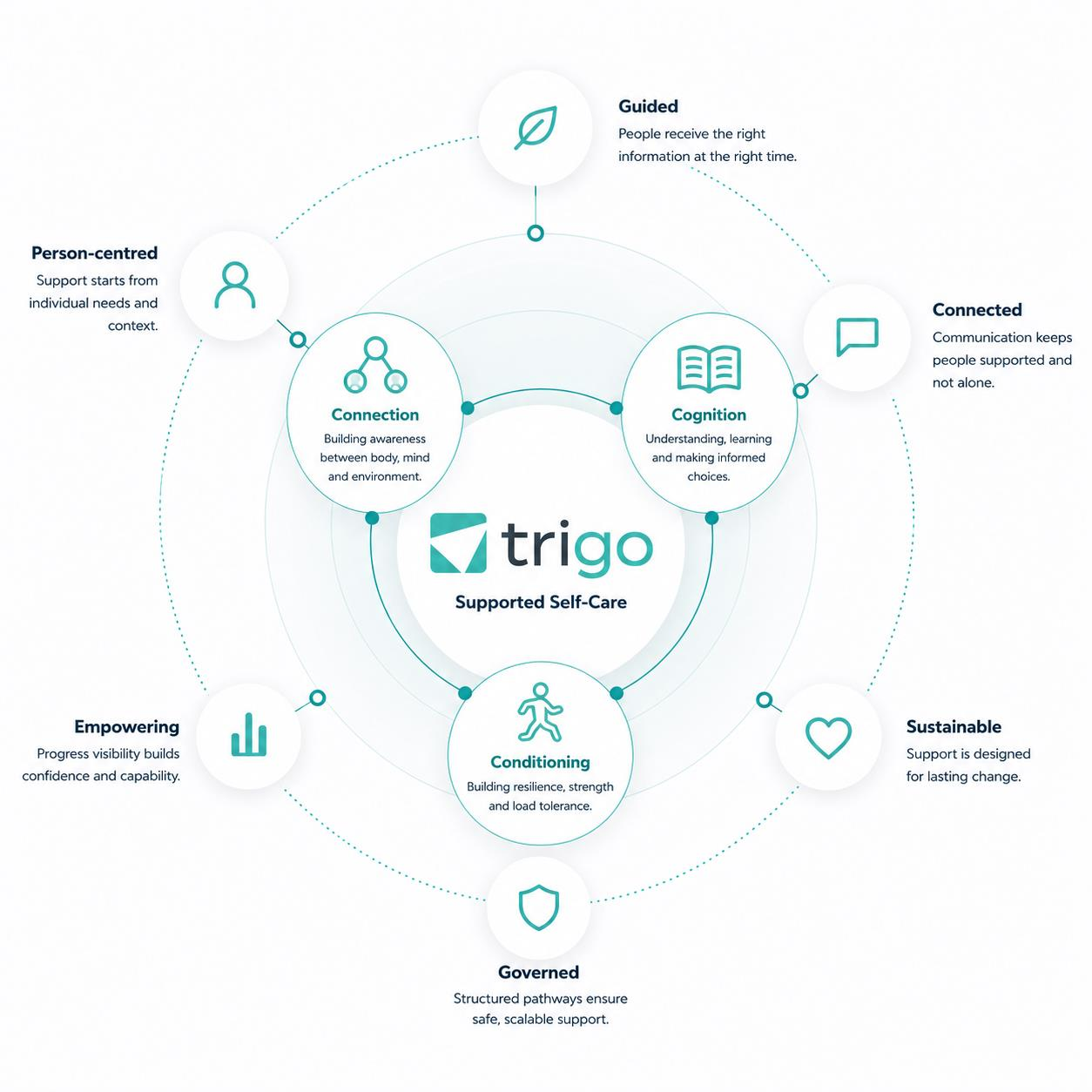
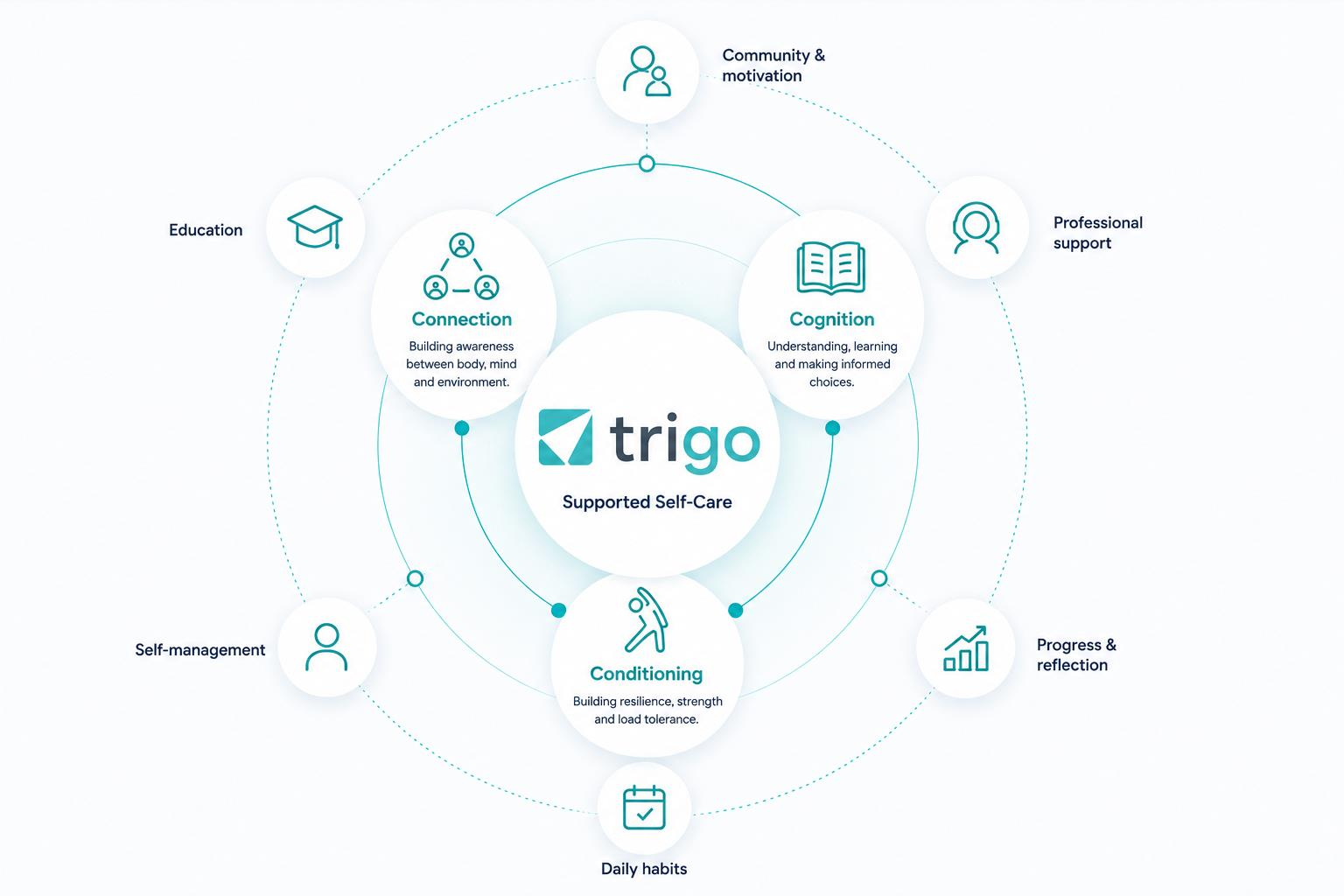
At Trigo, we see people as biological, psychological and social beings. Lasting improvements often come from understanding how these dimensions interact. This is why our model combines digital guidance with human expertise, structured pathways, educational content, communication tools and ongoing engagement.
The three pillars of the Trigo approach
Connection – Building awareness between body, mind and environment, while recognising the value of support from others.
Cognition – Increasing understanding and health literacy so that people can make informed decisions and become active participants in their own wellbeing.
Conditioning – Building resilience, strength, mobility and load tolerance through practical, achievable activities that fit everyday life.
Small actions. Sustainable change.
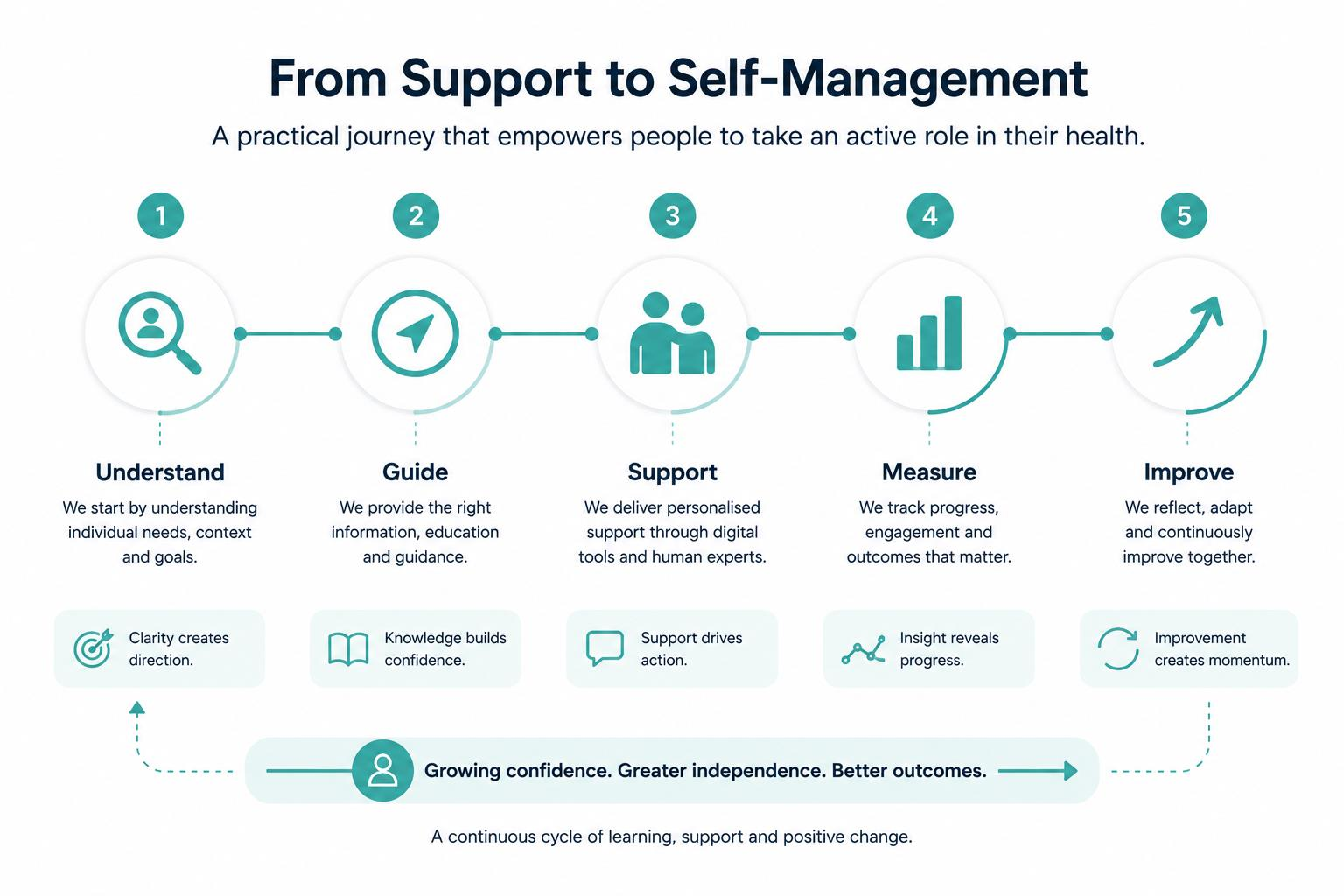
Our experience suggests that people are far more likely to succeed when they can take small, manageable steps that fit naturally into daily life. Success creates confidence. Confidence builds momentum. Over time, these small changes accumulate into meaningful and lasting improvements.
Supported self-care does not mean unsupported care
The purpose of supported self-care is to ensure that professional expertise is used where it creates the greatest value. Digital structure helps with communication, education, routine follow-up and progress visibility, while clinicians and coaches provide reassurance, assessment and guidance when it matters most.
Why this matters for organisations
Supported self-care helps organisations move from reactive treatment towards proactive support. It enables earlier conversations, clearer pathways and a better understanding of how people are progressing over time. That is why we increasingly describe Trigo as an infrastructure for supported self-care.
Looking ahead
The future of health and wellbeing will not be built around choosing between technology and people. It will come from combining the strengths of both. With the right knowledge, the right support and the right encouragement, small actions can create lasting change. That is the philosophy behind Trigo.